
Mediterranean pizza
Imagine pulling a pizza from your oven that’s not just another pepperoni pie, but a canvas of vibrant colors and bold, sun-drenched flavors. The aroma of garlic and oregano mingles with the tang of briny olives and creamy feta. This isn’t just dinner; it’s a mini-vacation to the Mediterranean coast, achievable on any busy weeknight.
As a chef who has made countless pizzas, I developed this recipe to bridge the gap between gourmet flavor and home-cook simplicity. You’ll get a perfectly chewy, crisp crust topped with a melody of roasted peppers, spinach, and onions, all brought together with savory cheeses. Let’s create a pizza that’s as nourishing as it is delicious.
This recipe is designed for success, flavor, and flexibility. Here’s what makes it a keeper:
- Restaurant-Quality at Home: The high-heat method and layered topping technique deliver a professional result with a crisp crust and perfectly melted cheese.
- Packed with Fresh Flavor: Unlike heavy, greasy takeout, this pizza is bright and balanced, featuring garlic, herbs, and fresh vegetables in every bite.
- Surprisingly Simple: Using store-bought dough streamlines the process, and the assembly is straightforward—no special skills required.
- Highly Customizable: This is a perfect blueprint. Don’t like olives? Swap them for artichokes. Need more protein? Add some grilled chicken or chickpeas.
- Health-Conscious Choice: Loaded with vegetables and controlled on the cheese, it’s a satisfying meal that feels indulgent without being overly heavy.
- Perfect for Sharing: It’s a visually stunning centerpiece for casual dinners, game nights, or even a fun Friday night cooking project with family.
Ingredients You’ll Need
- Let’s gather our ingredients—this is where the magic starts. The beauty of Mediterranean cooking lies in the quality of a few simple components. For the best flavor, use the best ingredients you can find.
- Pizza Dough: One pound of store-bought dough is a fantastic shortcut. Let it sit at room temperature for at least an hour; this makes it much easier to stretch without snapping back.
- Extra Virgin Olive Oil: This is our flavor workhorse. We’ll use it in the base, for brushing, and for finishing. A good, fruity oil makes a noticeable difference.
- Garlic & Oregano: Fresh minced garlic and dried oregano form the aromatic foundation of our sauce. The oregano should be fragrant—if yours is dusty and old, it’s time for a new jar.
- Crushed Tomatoes: Look for plain crushed tomatoes with no added basil or seasonings. We want to control the flavor profile ourselves. San Marzano tomatoes are ideal for their sweet, low-acidity taste.
- Fresh Vegetables: We’re using baby spinach (it wilts perfectly), jarred roasted red peppers (for sweet, smoky depth), and red onion (for a sharp, colorful bite).
- Kalamata Olives: Their bold, briny flavor is essential. Buy them pitted to save time.
- Cheeses: A blend of low-moisture, whole-milk mozzarella for stretch and melt, and feta for its creamy, tangy punch. Crumbling the feta yourself from a block is superior to pre-crumbled.
- Fresh Parsley: A final sprinkle adds a pop of color and fresh herbal note.

Note: You’ll find the complete list of ingredients, along with their exact measurements, in the printable recipe card at the bottom of this post.
Kitchen Equipment Needed
You don’t need a wood-fired oven to make exceptional pizza. A few key tools will set you up for success.
- Pizza Stone or Heavy Baking Sheet: This is non-negotiable for a crisp bottom crust. A stone absorbs and radiates intense heat, mimicking a pizza oven. If you don’t have one, use a heavy, inverted rimmed baking sheet.
- Parchment Paper: This is your secret weapon for easy transfer. Shape the dough on it, then slide the whole parchment onto the hot stone—no messy cornmeal or risky dough launches.
- Rolling Pin (Optional): Helpful if you’re new to stretching dough, but your hands work perfectly well.
- Pizza Cutter or Sharp Chef’s Knife: For clean, easy slicing.
How to Make Mediterranean Pizza Recipe
Step 1: Heat the Oven and Shape the Dough
First, place your pizza stone or an inverted heavy baking sheet on the middle oven rack and crank the heat to 500°F (260°C). Let it preheat for a full 30 minutes—this ensures a blast of heat for that perfect crust. While it heats, on a lightly floured surface, gently press and stretch your room-temperature dough into a rough 12-inch circle.
Don’t worry about perfection; rustic is charming. Transfer it to a sheet of parchment paper and brush the outer edge with a thin layer of olive oil. This will give us a beautifully golden, flavorful crust.
Step 2: Build the Flavor Base
Now for the flavor foundation. In a small bowl, mix one tablespoon of olive oil with the minced garlic, dried oregano, and red pepper flakes. Using the back of a spoon, spread this fragrant oil mixture evenly over the dough, leaving that oil-brushed border bare.
Believe me, this step infuses the crust with flavor from the bottom up. Next, spoon and spread the crushed tomatoes over the garlic oil. You’re creating layers of taste that will meld together beautifully in the oven.
Step 3: Layer the Toppings Strategically
Here’s a pro tip to avoid a soggy center: sprinkle all of the shredded mozzarella cheese directly over the sauce. This cheese layer acts as a moisture barrier for the crust. Now, artfully scatter the fresh spinach, sliced roasted peppers, red onion, and halved kalamata olives over the cheese.
Finally, crumble the feta cheese over everything. The feta won’t melt completely, and that’s what we want—little pockets of salty, tangy creaminess.
Step 4: Bake to Golden Perfection
Carefully slide the pizza, still on its parchment paper, onto the screaming-hot stone or baking sheet. Close the oven door quickly. Bake for 12 to 15 minutes.
You’re looking for a deeply golden-brown crust, bubbly, spotted cheese, and vegetables that look vibrant and just kissed by the heat. The high heat ensures a quick cook, which keeps the vegetables fresh-tasting and the crust crisp.
Step 5: Rest, Garnish, and Serve
This might be the hardest step: patience. Use a peel or pull the parchment onto a cutting board and let the pizza rest for 3 to 5 minutes. This allows the cheeses to set so your slices stay intact.
Just before slicing, drizzle with the remaining tablespoon of good olive oil and sprinkle with fresh parsley. Slice it up, step back, and admire your gorgeous, homemade Mediterranean masterpiece.
A few insights from my years in the kitchen will elevate your pizza from good to great.
- Dough Temperature is Key: Cold dough is elastic and will fight you. Letting it come fully to room temperature makes it pliable and easy to shape without tearing or springing back.
- The High-Heat Principle: A home oven’s highest setting is your friend for pizza. The intense, immediate heat creates “oven spring” in the dough (rapid rising) for an airy, crisp crust. Don’t be afraid of 500°F.
- Less is More with Toppings: Overloading a pizza is the most common mistake. Too many wet toppings steam the crust instead of letting it crisp. Stick to the amounts listed for the perfect balance.
- Invest in a Stone: If you make pizza more than twice a year, a $40 pizza stone is a game-changer. It stores and radiates heat far better than any metal pan, giving you a professional-quality crust.
- The Finish with Oil: That final drizzle of extra virgin olive oil after baking isn’t just for show. It adds a luxurious mouthfeel and carries the flavors of the herbs and garlic beautifully.
Recipe Variations
- This recipe is a wonderful template. Feel free to make it your own with these tested variations.
- Greek-Inspired: Add thinly sliced cucumber and a dollop of tzatziki sauce after baking for a cool, creamy contrast.
- Protein Power: For a non-vegetarian version, top with ½ cup of chopped grilled chicken breast or a few slices of crumbled cooked lamb sausage before adding the cheese.
- Vegan Delight: Use a plant-based mozzarella and skip the feta, or use a vegan feta alternative. Add marinated artichoke hearts for more substance.
- Spicy Kick: Add sliced pepperoncini or a sprinkle of Calabrian chili paste over the crushed tomatoes for a pleasant heat.
- Seafood Twist: After baking, top with a handful of chopped, cooked shrimp or flaked canned tuna for a coastal vibe.
- Gluten-Free: Use your favorite certified gluten-free pizza dough. You may need to bake it on the parchment the entire time to prevent sticking.
- White Pizza: Omit the crushed tomatoes. Increase the garlic-herb oil to 3 tablespoons and mix in ¼ cup of ricotta cheese before spreading it on the dough.
What to Serve With This Recipe
This pizza is a complete meal on its own, but it pairs beautifully with simple sides to create a full Mediterranean spread.
For a light and refreshing counterpoint, serve it with a simple Arugula Salad tossed with lemon juice, olive oil, shaved Parmesan, and a crack of black pepper. A bowl of Lemon-Oregano Roasted Potatoes or Herbed Gigante Beans would make it a more substantial feast. Beverage-wise, a crisp, dry white wine like a Pinot Grigio or Sauvignon Blanc complements the bright flavors perfectly.
For a non-alcoholic option, sparkling water with a squeeze of lemon or a mint-infused iced tea is ideal. This pizza is perfect for casual weekend dinners, summer gatherings on the patio, or a fun and interactive meal where everyone can customize their own slice.
Storage & Make-Ahead Instructions
- While best fresh, leftovers can still be delicious with proper handling.
- Refrigeration: Cool leftover pizza completely, then store slices in a single layer in an airtight container in the refrigerator for up to 3 days.
- Freezing: For longer storage, place cooled slices on a parchment-lined baking sheet and freeze until solid (about 2 hours). Then transfer to a freezer bag, pressing out excess air. Freeze for up to 2 months.
- Reheating for Best Results: Do not microwave—it makes the crust soggy. Reheat slices directly on the rack of a 375°F (190°C) oven for 8-10 minutes, or in a skillet over medium-low heat with a lid until the cheese melts and the bottom re-crisps.
- Make-Ahead Strategy: You can prep components ahead of time. Slice all vegetables and store them separately in containers in the fridge. Make the garlic-herb oil mixture up to a day in advance. Have the dough thawing in the fridge the night before, then let it come to room temperature on the counter an hour before baking.
Frequently Asked Questions
Q: Can I use pre-made pizza crust or a flatbread?
A: Absolutely. For an ultra-quick version, use a pre-baked naan, flatbread, or cauliflower crust. Adjust baking time down significantly (usually 8-10 minutes at 425°F), as you’re just melting toppings and warming it through.
Q: My dough keeps shrinking back when I try to stretch it. What am I doing wrong?
A: This means the gluten is too tight. The dough is likely too cold or needs to relax. Let it sit at room temperature longer—up to 2 hours.
If it still resists, gently stretch it partway, let it rest for 5 minutes, then stretch again. Never force it.
Q: Can I make the dough from scratch?
A: Of course! A simple dough with bread flour, yeast, water, salt, and a touch of olive oil will yield fantastic results. You’ll need to factor in about 1.5 hours for rising time.
Q: Why is my pizza crust soggy in the middle?
A: The main culprits are too many wet toppings, under-preheating your baking surface, or not using a barrier (like the mozzarella) between the sauce and wet veggies. Ensure your roasted peppers and olives are well-drained, too.
Q: Can I add fresh tomatoes instead of sauce?
A: I don’t recommend it. Fresh tomato slices release a lot of water. If you want a fresh tomato flavor, use the crushed tomato base and add a few halved cherry tomatoes on top—they have less moisture.
Q: What’s the best way to slice a pizza?
A: Use a sharp pizza cutter or a large chef’s knife. For a clean cut, don’t use a sawing motion; use firm, decisive pressure and roll or press straight down.
Q: Is there a way to make this without a pizza stone?
A: Yes. Use a heavy, rimmed baking sheet turned upside down. Preheat it just like a stone.
The results are very good, though the bottom may not get quite as crisp.
Final Thoughts
This Mediterranean pizza recipe is more than just a list of ingredients and steps; it’s an invitation to bring vibrant, healthy, and incredibly satisfying flavors to your table with confidence. From the garlic-infused base to the final drizzle of olive oil, every element is designed to work in harmony, proving that “healthy” doesn’t mean sacrificing an ounce of enjoyment. As a chef, my goal is always to give you recipes that work reliably and deliver restaurant-worthy results, and this pizza consistently does just that.
I hope it becomes a regular in your dinner rotation, as adaptable as it is delicious. Give it a try this week, and don’t forget to come back and rate the recipe. If you share your creation on social media, tag me—I love seeing your culinary triumphs!
Now, go preheat that oven and get ready for a flavor-packed meal that’s sure to impress.
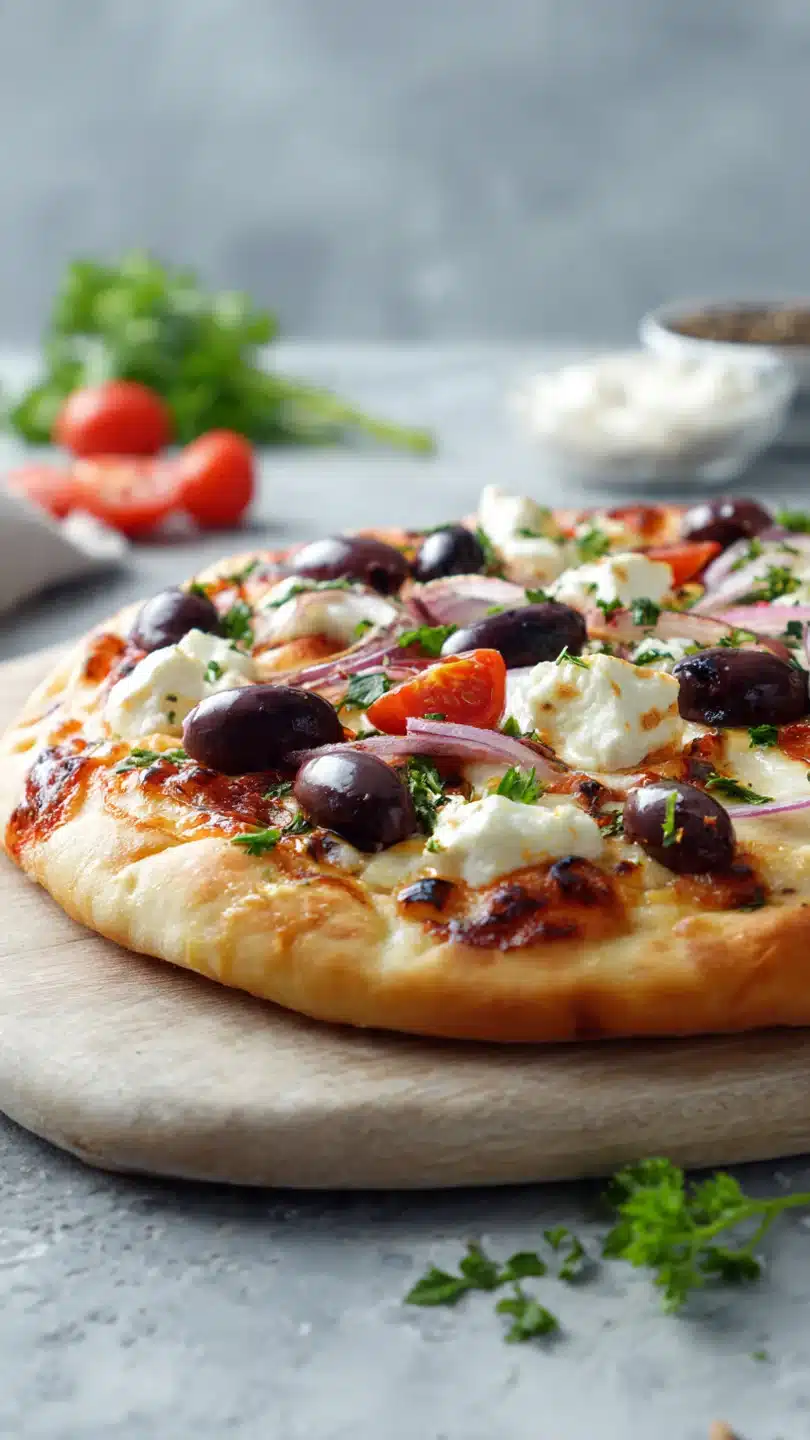
Mediterranean Pizza
Ingredients
Equipment
Method
- Preheat your oven to 500°F (260°C) with a pizza stone or inverted baking sheet placed on the middle rack. Let it heat for at least 30 minutes. On a lightly floured surface, gently stretch the room-temperature dough into a 12-inch round. Transfer it to a piece of parchment paper. Brush the outer crust lightly with olive oil.
- In a small bowl, combine 1 tablespoon of olive oil, the minced garlic, dried oregano, and red pepper flakes (if using). Spread this mixture evenly over the dough, leaving a ½-inch border. Then, spread the crushed tomatoes over the garlic oil base. This two-layer approach builds incredible flavor from the bottom up.
- Sprinkle the shredded mozzarella cheese evenly over the sauce. This creates a protective layer that helps prevent a soggy crust. Then, artfully arrange the spinach, roasted red peppers, red onion, and kalamata olives over the cheese. Trust me, this order matters for even cooking.
- Top the vegetables with the crumbled feta cheese. Carefully slide the pizza (on the parchment paper) onto the preheated stone or baking sheet. Bake for 12-15 minutes, or until the crust is deeply golden, the cheese is bubbly, and the edges of the vegetables are just starting to char.
- Remove the pizza from the oven and let it rest on a cutting board for 3-5 minutes. This allows the cheese to set so it doesn’t slide off when you slice. Drizzle with the remaining tablespoon of olive oil, sprinkle with fresh parsley, slice, and serve immediately.


