
meatloaf with tomato soup
There’s a reason meatloaf has been a steadfast pillar of the family dinner table for generations. When done right, it’s the epitome of comfort: savory, satisfying, and deeply nostalgic. But let’s be honest—a dry, bland meatloaf is a culinary tragedy.
That’s why, after years in professional kitchens, I’ve refined this classic to be absolutely foolproof. The secret weapon? A humble can of condensed tomato soup.
It forms the base of a glaze that caramelizes into a sticky, tangy-sweet crust, locking in incredible moisture and flavor. This isn’t just dinner; it’s a warm, delicious hug on a plate.
This recipe is designed for success, blending professional technique with home-cooked ease.
- Guaranteed Moisture: The milk-soaked breadcrumb panade is a chef’s trick that binds the meatloaf and keeps every single bite tender and juicy.
- Flavorful Glaze: The tomato soup glaze isn’t an afterthought—it’s a balanced, three-ingredient sauce that bakes into a caramelized, flavor-packed crust.
- Simple Ingredients: You likely have most of these pantry staples on hand already, making this an ideal “what’s for dinner?” solution.
- Family-Friendly: This classic flavor profile is a universal crowd-pleaser, perfect for picky eaters and comforting weeknights.
- Perfect for Leftovers: Meatloaf famously tastes even better the next day, making fantastic sandwiches or a quick reheat dinner.
- Customizable Base: Once you master this formula, you can easily adapt the herbs, spices, and glaze to create your own signature version.
Ingredients You’ll Need
- Let’s gather our ingredients. This recipe uses a combination of simple pantry items and a strategic blend of meats to create a meatloaf that’s far greater than the sum of its parts. The ground pork mixed with the beef adds a layer of fat and flavor that pure beef often lacks, resulting in a richer, more succulent loaf. For the tomato soup, use the classic condensed variety straight from the can—do not dilute it. This concentrated form is key for a glaze that sets up beautifully in the oven.
- Ground Beef: I recommend an 85/15 blend. You need some fat for flavor and moisture, but too much can cause excessive shrinkage and grease.
- Ground Pork: This is my not-so-secret weapon for adding depth and preventing dryness. If you can’t find it, use all beef, but the texture won’t be quite as tender.
- Yellow Onion & Garlic: The aromatic foundation. Finely dicing the onion ensures it cooks through and disperses flavor evenly.
- Eggs & Breadcrumbs: The binding agents. Soaking the plain breadcrumbs in milk first creates a panade, which is the ultimate insurance against a dry meatloaf.
- Worcestershire Sauce & Dijon Mustard: These provide the essential savory, umami backbone. Don’t skip them.
- Condensed Tomato Soup: The star of the glaze. Its concentrated tomato flavor and slight sweetness are ideal.
- Ketchup, Brown Sugar & Vinegar: These balance the glaze. The ketchup adds tomato depth, the sugar promotes caramelization, and the vinegar cuts through the richness with a necessary tang.

Note: You’ll find the complete list of ingredients, along with their exact measurements, in the printable recipe card at the bottom of this post.
Kitchen Equipment Needed
You don’t need any fancy gadgets for this recipe. A large mixing bowl is essential for combining everything. You can use a standard 9×5-inch loaf pan for a traditional shape, or for more caramelized edges, shape it on a rimmed baking sheet lined with parchment paper.
An instant-read thermometer is the single most important tool here—it takes the guesswork out of doneness and guarantees food safety. A small bowl for mixing the glaze and a spoon for spreading it round out your needs.
How to Make Meatloaf with Tomato Soup Glaze Recipe
Step 1: Prep the Panade and Aromatics
Preheat your oven to 350°F (175°C). In your large mixing bowl, combine the milk and breadcrumbs. Let them sit for 5 minutes to allow the breadcrumbs to fully absorb the milk—this is your panade, the secret to a tender, never-dry meatloaf.
Meanwhile, finely dice the onion and mince the garlic. This little bit of prep upfront makes the mixing process quick and easy.
Step 2: Gently Combine the Meat Mixture
Add the ground beef, ground pork, soaked breadcrumbs, onion, garlic, eggs, Worcestershire sauce, Dijon mustard, thyme, salt, and pepper to the bowl. Now, using your hands, gently mix everything together until just combined. I know it’s tempting to squeeze and knead, but overmixing will make the meatloaf dense and tough.
Trust me, a light touch here makes all the difference in the final, tender texture.
Step 3: Shape the Loaf
Transfer the meat mixture to your chosen vessel. For a loaf pan, simply press it in gently. For a free-form loaf on a parchment-lined baking sheet, shape it into a 9×5-inch loaf, smoothing the top and sides.
Press the mixture gently to eliminate any large air pockets, which can cause cracking. Both methods work great; the pan gives a neater shape, while the sheet pan offers more surface area for that delicious glaze.
Step 4: Make and Apply the Glaze
In a small bowl, whisk together the condensed tomato soup, ketchup, brown sugar, and apple cider vinegar until perfectly smooth. This creates a beautifully balanced glaze that’s tangy, sweet, and savory. Believe me, the vinegar is crucial—it keeps the glaze from being cloying.
Reserve about 1/4 cup of the glaze for serving later. Pour the remaining glaze evenly over the top of the meatloaf, spreading it right to the edges with the back of a spoon.
Step 5: Bake to Perfection
Place the meatloaf in the preheated oven and bake for 55 to 65 minutes. The meatloaf is done when an instant-read thermometer inserted into the thickest part registers 160°F (71°C). The glaze should be bubbling, set, and slightly caramelized at the edges.
Tip from me: Always use a thermometer. Visual cues like color can be deceiving, but temperature never lies.
Step 6: Rest, Slice, and Serve
This is the hardest but most important step: patience. Remove the meatloaf from the oven and let it rest in the pan for at least 10 full minutes. This crucial step allows the juices to redistribute throughout the loaf.
If you cut in immediately, all those precious juices will run out, leaving you with a drier slice. After resting, transfer to a cutting board, slice, and serve with the reserved glaze on the side.
A few chef-level insights will elevate your meatloaf from good to exceptional.
- The Panade is Paramount: Don’t rush the 5-minute soak for the breadcrumbs and milk. This mixture, called a panade, creates a protective barrier around the meat proteins, ensuring incredible moisture. It’s the number one defense against dryness.
- Handle with Care: Mix the meatloaf ingredients with a light hand, just until combined. Overworking the proteins (myosin) will cause them to tighten and create a dense, rubbery texture, similar to an over-kneaded bread dough.
- Temperature is Truth: An instant-read thermometer is non-negotiable for food safety and perfect doneness. Ground meat must reach 160°F (71°C). Baking by time alone can lead to under or overcooking, as oven temperatures and loaf shapes vary.
- The Rest is Essential: Letting the meatloaf rest after baking allows the internal temperature to stabilize and the juices, which have been driven to the center by the heat, to seep back throughout the entire loaf. This results in a slice that holds together beautifully.
- Free-Form for Caramelization: For more flavorful, caramelized edges, bake your meatloaf free-form on a parchment-lined baking sheet. This exposes more surface area to the oven’s direct heat, creating delicious browned bits.
Recipe Variations & Customizations
- This recipe is a fantastic blueprint. Once you’ve mastered the basic technique, feel free to get creative with these tested variations.
- Turkey Meatloaf: For a leaner option, substitute the beef and pork with 1.5 lbs of ground turkey (93/7 blend). Add an extra tablespoon of olive oil to the mixture to compensate for the lower fat content.
- Gluten-Free: Use an equal amount of certified gluten-free breadcrumbs or crushed gluten-free crackers in place of the regular breadcrumbs. Double-check your Worcestershire sauce, as some brands contain wheat.
- Spicy Kick: Add 1-2 teaspoons of smoked paprika and a pinch of cayenne pepper to the meat mixture. For the glaze, stir in 1 tablespoon of sriracha or a few dashes of hot sauce.
- Italian-Inspired: Replace the thyme with 2 teaspoons of Italian seasoning and add 1/2 cup of finely grated Parmesan cheese to the meat mixture. Use marinara sauce instead of the tomato soup in the glaze.
- BBQ Meatloaf: Swap the tomato soup glaze for a mixture of 1 cup of your favorite BBQ sauce, 2 tablespoons of apple cider vinegar, and 1 tablespoon of molasses. Brush it on during the last 20 minutes of baking.
- Mushroom & Herb: Sauté 8 oz of finely chopped mushrooms with the onions until all their liquid evaporates. Add to the meat mixture along with 2 tablespoons of fresh chopped parsley.
What to Serve With This Recipe
Meatloaf is the hearty centerpiece of a classic comfort food plate. For the ultimate experience, pair it with creamy mashed potatoes—the perfect vehicle for that extra glaze. A simple steamed or roasted green vegetable like green beans, broccoli, or asparagus adds freshness and color.
For a Southern twist, serve with buttery cornbread or macaroni and cheese. If you have leftovers (a big if!), they make arguably the best meatloaf sandwich the next day on toasted bread with a swipe of mayonnaise and crisp lettuce.
Storage & Make-Ahead Instructions
- Proper storage ensures your meatloaf stays delicious for days.
- Refrigeration: Cool the meatloaf completely, then store slices or the whole loaf in an airtight container in the refrigerator for up to 4 days.
- Freezing: Wrap cooled slices or the whole loaf tightly in plastic wrap and then aluminum foil. Freeze for up to 3 months. Thaw overnight in the refrigerator before reheating.
- Reheating: The best method to retain moisture is to reheat slices in a covered oven-safe dish with a splash of broth or water at 325°F until warmed through (about 15-20 minutes). You can also microwave individual slices on medium power with a damp paper towel over them.
- Make-Ahead: You can assemble the raw meatloaf in the pan, cover tightly, and refrigerate for up to 24 hours before baking. Let it sit at room temperature for 30 minutes before putting it in the oven. The glaze can be mixed and stored separately in the fridge.
Frequently Asked Questions
Q: Can I use all beef instead of a beef/pork mix?
A: Absolutely. Using 1.5 lbs of ground beef (85/15) will work. The texture will be slightly firmer and less rich, but it will still be delicious.
The pork adds a unique tenderness and flavor depth that I highly recommend trying at least once.
Q: Why is my meatloaf falling apart when I slice it?
A: This is usually due to insufficient binding or not letting it rest. Ensure your eggs are well-beaten and mixed in thoroughly. Most importantly, you must let the meatloaf rest for a full 10 minutes after baking.
This allows the proteins to set and the structure to firm up.
Q: Can I make this in a muffin tin for individual portions?
A: Yes! Divide the mixture into a standard 12-cup muffin tin (greased or lined). Reduce the baking time to 25-30 minutes, or until the internal temperature reaches 160°F.
This is a great option for portion control or kids.
Q: My glaze is too sweet. How can I adjust it?
A: The balance of sweet and tangy is key. If you find it too sweet, reduce the brown sugar to 1 tablespoon and increase the apple cider vinegar to 1.5 or 2 tablespoons. Taste the glaze before applying it and adjust to your preference.
Q: Is it okay if the center is slightly pink?
A: With ground meat, color is not a reliable indicator of doneness. The only way to be sure it’s safe to eat is to use a meat thermometer. Ground beef and pork must reach 160°F to ensure any harmful bacteria are destroyed.
Q: Can I prepare and freeze this meatloaf unbaked?
A: Yes. Assemble the meatloaf in a freezer-safe loaf pan or shape it on a parchment-lined sheet to freeze solid, then wrap tightly. Bake from frozen, adding 25-50% more baking time, until it reaches 160°F internally.
Q: What can I use instead of breadcrumbs?
A: Rolled oats (quick or old-fashioned, not steel-cut) are an excellent substitute. Use the same amount by volume. Crushed saltine crackers or panko breadcrumbs also work well.
Final Thoughts
This meatloaf with tomato soup glaze is more than just a recipe; it’s a reliable path to a satisfying, crowd-pleasing meal that feels like home. By understanding the simple science behind the panade, the gentle mixing, and the crucial rest, you’re equipped to make a truly exceptional version of this classic dish every single time. The tangy-sweet glaze is the crowning glory, transforming simple ingredients into something special.
I encourage you to make this recipe your own—try the variations, pair it with your favorite sides, and most importantly, share it with people you care about. Once you try it, I’d love to hear how it turned out. Leave a comment or rating below, and if you share a photo on social media, tag me so I can see your delicious creation.
Happy cooking
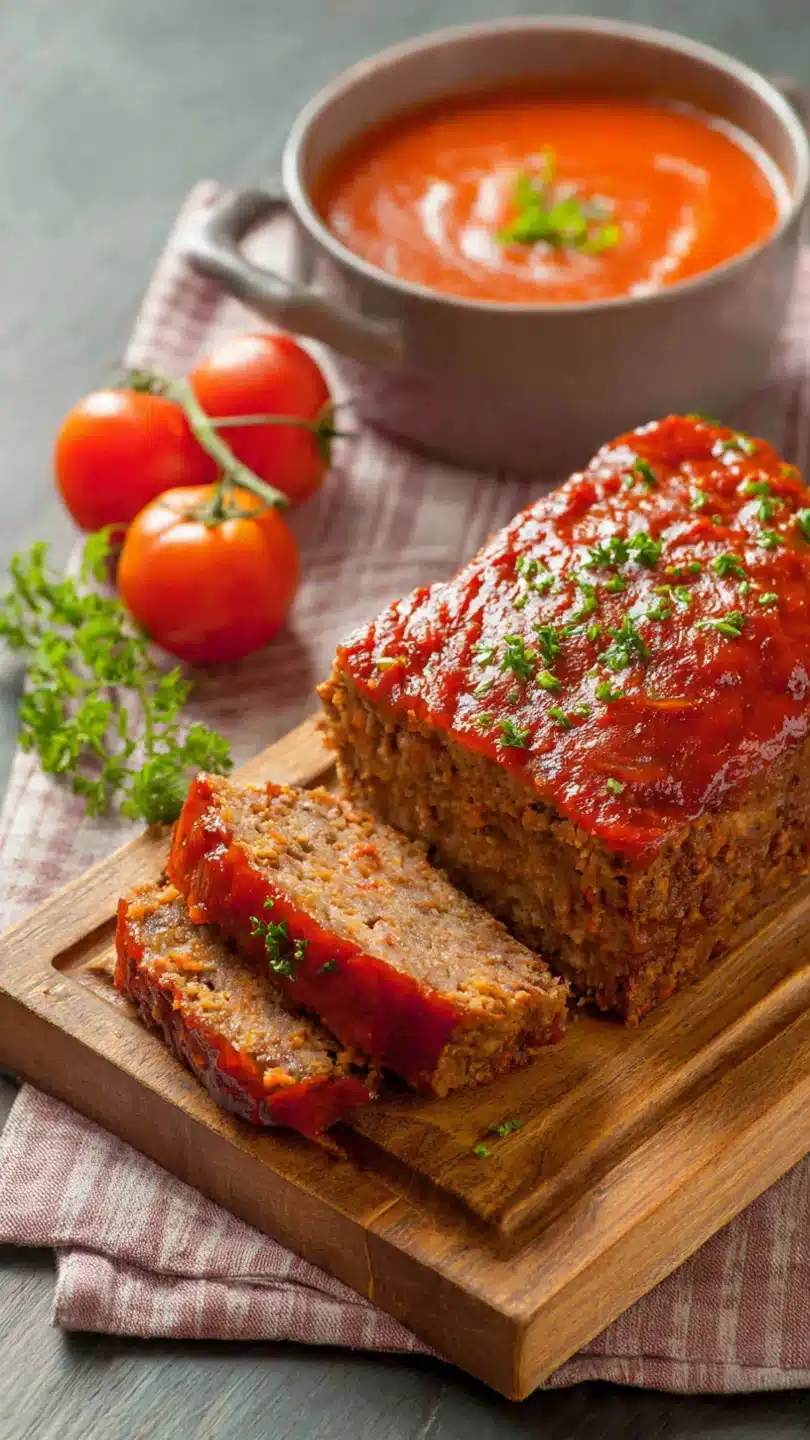
Classic Meatloaf with Tomato Soup Glaze
Ingredients
Equipment
Method
- Preheat your oven to 350°F (175°C). In a large mixing bowl, combine the milk and breadcrumbs. Let them sit for 5 minutes to allow the breadcrumbs to fully absorb the milk—this is your panade, the secret to a tender, never-dry meatloaf. Meanwhile, finely dice the onion and mince the garlic.
- Add the ground beef, ground pork, soaked breadcrumbs, onion, garlic, eggs, Worcestershire sauce, Dijon mustard, thyme, salt, and pepper to the bowl. Using your hands, gently mix everything together until just combined. Overmixing will make the meatloaf dense and tough. Trust me, a light touch here makes all the difference in the final texture.
- Transfer the meat mixture to a 9×5-inch loaf pan or shape it into a free-form loaf on a rimmed baking sheet lined with parchment paper. The loaf pan yields a more uniform shape, while the baking sheet method allows for more caramelization on the sides. Press the mixture gently to eliminate any large air pockets.
- In a small bowl, whisk together the condensed tomato soup, ketchup, brown sugar, and apple cider vinegar until smooth. This creates a perfectly balanced glaze that’s tangy, sweet, and savory. Reserve about 1/4 cup of the glaze for serving. Pour the remaining glaze evenly over the top of the meatloaf, spreading it to the edges with a spoon.
- Place the meatloaf in the preheated oven and bake for 55 to 65 minutes. The meatloaf is done when an instant-read thermometer inserted into the thickest part registers 160°F (71°C). The glaze should be bubbling and set. Tip from me: Always use a thermometer for perfect doneness every time.
- Remove the meatloaf from the oven and let it rest in the pan for at least 10 minutes. This crucial step allows the juices to redistribute, ensuring a moist slice that holds together when cut. Transfer to a cutting board, slice, and serve with the reserved glaze on the side.


