
Fig pizza
Imagine the scene: a warm, crisp crust emerges from your oven, its surface a landscape of jammy figs, golden onions, and creamy cheese, finished with salty prosciutto and peppery greens. This isn’t just pizza; it’s a perfect balance of sweet, savory, creamy, and salty in every bite. As a chef, I love recipes that deliver maximum flavor with minimal fuss, and this gourmet fig flatbread is exactly that.
It transforms simple, quality ingredients into a show-stopping meal that feels special enough for a dinner party but comes together quickly on a weeknight. Let’s make a pizza that will redefine what you think a homemade pie can be.
This recipe is designed for success and satisfaction, whether you’re a seasoned cook or a kitchen novice.
- Restaurant Quality at Home: This pizza rivals what you’d order at a gourmet wood-fired pizzeria, but you control the ingredients and the cost.
- Perfect Flavor Balance: The natural sweetness of figs and caramelized onions is expertly cut by the tangy goat cheese and salty prosciutto, creating a complex taste profile.
- Surprisingly Simple: Using pre-made dough streamlines the process. The active work is minimal—it’s mostly about patient assembly and letting the oven do its magic.
- Visually Stunning: The deep purple figs, white cheese, and green arugula make this pizza as beautiful as it is delicious, perfect for impressing guests.
- Endlessly Customizable: The base formula is a fantastic template. Don’t have figs? Try pears. Not a goat cheese fan? Use gorgonzola or burrata. I’ll share more variations below.
Ingredients You’ll Need
- Let’s gather our ingredients. This is where the magic starts—each component plays a specific role in building the final symphony of flavors. Using high-quality, simple ingredients is key here.
- Pre-made Pizza Dough: The foundation. A 1-pound ball of store-bought dough is a fantastic shortcut. Let it come to room temperature for easy stretching. For a homemade touch, my favorite is a simple dough with a bit of whole wheat flour for nuttiness.
- Yellow Onion: We’ll slowly cook it down into sweet, jammy caramelized onions. This step builds a deep flavor base that’s crucial. Trust me, don’t rush it.
- Fresh Figs: Look for plump, soft figs with intact stems. Black Mission or Brown Turkey figs work beautifully. Their honeyed sweetness is the star.
- Goat Cheese: Its tangy, creamy quality balances the figs’ sweetness perfectly. Buy a log and crumble it yourself for the best texture and flavor.
- Prosciutto: Adds a essential salty, savory note. We add it after baking so it stays silky and doesn’t become tough or overly crispy.
- Baby Arugula: Provides a fresh, peppery crunch and a vibrant green color. It wilts slightly from the pizza’s heat, which is exactly what you want.
- Balsamic Vinegar: A small amount cooked with the onions adds depth, and a final drizzle at the end gives a bright, acidic pop that ties everything together.
- Fresh Thyme: Its earthy, lemony fragrance complements the figs wonderfully. If you only have dried, use half the amount.

Note: You’ll find the complete list of ingredients, along with their exact measurements, in the printable recipe card at the bottom of this post.
Kitchen Equipment Needed
You don’t need professional gear to make professional-tasting pizza. Here’s what will help you succeed.
- Pizza Stone or Heavy Baking Sheet: A preheated stone is ideal for a crisp, blistered crust. If you don’t have one, a heavy, inverted rimmed baking sheet works nearly as well.
- Skillet: For caramelizing the onions. A non-stick or well-seasoned cast iron pan is perfect.
- Parchment Paper: My #1 tip for stress-free pizza making. You shape the dough on it, then slide the whole parchment onto the hot stone. No sticking, no messy cornmeal.
- Pizza Peel or Flat Baking Sheet: To transfer your parchment-lined pizza into the oven. If you don’t have a peel, use another flat baking sheet as a shovel.
How to Make Fig Pizza Recipe
Step 1: Caramelize the Onions and Prep
Start by preheating your oven to a hot 475°F (245°C) with your pizza stone or baking sheet inside. This ensures a searing surface for your crust. While it heats, let’s build flavor.
In a skillet, cook your thinly sliced onions with olive oil and a pinch of salt over medium-low heat. This isn’t a quick sauté—give them a good 12-15 minutes, stirring occasionally, until they turn a deep, golden brown and smell incredibly sweet. Believe me, this patience pays off in flavor.
Off the heat, stir in a teaspoon of balsamic vinegar. This adds a sweet-tart complexity.
Step 2: Shape the Dough
On a lightly floured surface, gently stretch your room-temperature dough. Don’t use a rolling pin if you can avoid it; use your hands to press and stretch from the center outwards. Aim for a 12-inch round or a rustic oval shape—perfection is overrated.
Tip from me: if the dough springs back, let it rest for 5 minutes and try again. Once shaped, transfer it to a sheet of parchment paper. This is your launch pad.
Step 3: Assemble the Toppings
Now for the fun part: building your pizza. Spread the glorious caramelized onions evenly over the dough, leaving a small border for the crust. Scatter the crumbled goat cheese and quartered fresh figs over the onions.
The figs will soften and caramelize in the oven’s intense heat. Drizzle the whole thing lightly with a bit more olive oil and crack some fresh black pepper over the top. Avoid overloading; you want distinct flavor pockets, not a soggy pile.
Step 4: Bake to Perfection
Carefully slide the pizza, still on its parchment paper, onto the preheated stone in the oven. You should hear a satisfying sizzle. Bake for 12 to 15 minutes.
You’re looking for a puffed, golden-brown crust and edges, with the cheese melted and the figs looking soft and jammy. The high heat ensures a crisp base while gently cooking the delicate toppings.
Step 5: Finish and Serve
As soon as the pizza comes out of the oven, immediately top it with the torn prosciutto, fresh arugula, and thyme leaves. The residual heat will slightly wilt the greens and warm the prosciutto perfectly. Finish with a final flourish: a light drizzle of good olive oil, a splash of balsamic vinegar, and a sprinkle of flaky sea salt.
Let it rest for just 2-3 minutes to set, then slice, serve, and step back to admire your gorgeous creation.
A few chef-driven insights will elevate your pizza from great to exceptional.
- Temperature is Non-Negotiable: Your oven and stone must be fully preheated. A 475°F (245°C) oven is the minimum for proper crust development. If your oven runs hot, even better.
- The Parchment Paper Trick: This is the ultimate hack for home pizza making. It eliminates the fear of a stuck or misshapen launch. You can even bake the pizza on the parchment the entire time.
- Post-Bake Toppings are Key: Adding the prosciutto and arugula after baking preserves their delicate textures and flavors. The prosciutto stays silky, and the arugula stays bright and peppery instead of burning.
- Fig Ripeness Matters: Use ripe but not mushy figs. Underripe figs won’t soften and sweeten enough, while overripe ones may make the pizza too wet.
- Rest the Dough: Letting your dough come to room temperature isn’t a suggestion—it’s essential. Cold dough is tight and will fight you when you try to stretch it, leading to a tough crust.
Recipe Variations
- This recipe is a wonderful canvas. Here are some tested variations to suit different tastes and occasions.
- Vegetarian Delight: Simply omit the prosciutto. For added protein and texture, sprinkle on some toasted walnuts or pecans after baking.
- Blue Cheese Swap: If goat cheese isn’t your favorite, substitute with crumbled gorgonzola or creamy gorgonzola dolce. Its sharper, saltier profile pairs powerfully with the sweet figs.
- Pear & Walnut: In the fall or winter, substitute thinly sliced ripe pears for the figs and add toasted walnuts with the arugula. A drizzle of honey at the end is fantastic here.
- Balsamic Glaze Drizzle: Instead of straight vinegar, reduce balsamic vinegar with a touch of honey until syrupy and drizzle that over the finished pizza for a more intense, sweet-tart finish.
- Herb-Infused Oil: Infuse your olive oil with rosemary or thyme by warming them gently together, then strain. Use this flavored oil for drizzling to add another layer of aroma.
- Fig Jam Base: If fresh figs are out of season, use a high-quality fig jam as the base sauce instead of (or in addition to) the caramelized onions. Thin it with a little water first for easier spreading.
What to Serve With This Recipe
This pizza is substantial enough to be a main course but also makes elegant appetizer slices.
For a complete meal, pair it with a simple, crisp side salad to cut through the richness. A classic arugula salad with lemon vinaigrette is perfect, or a shaved fennel and citrus salad. For a heartier spread, serve it alongside a bowl of roasted tomato soup or a charcuterie board to start.
Beverage-wise, the sweet and savory notes pair beautifully with a dry sparkling wine, a crisp Sauvignon Blanc, or a light-bodied red like Pinot Noir. For a non-alcoholic option, sparkling water with a twist of lemon or a ginger-based mocktail works wonderfully.
Storage & Make-Ahead Instructions
- This pizza is best enjoyed fresh, but you can manage components ahead of time.
- Storage: Store any leftover slices in an airtight container in the refrigerator for up to 2 days. The arugula will wilt significantly, so you may want to pick it off before storing.
- Reheating: Reheat slices in a toaster oven or conventional oven at 375°F (190°C) for 5-7 minutes until warm and the crust re-crisps. Avoid the microwave, as it will make the crust soggy.
- Make-Ahead: You can caramelize the onions up to 3 days in advance and store them in the fridge. You can also slice the figs and crumble the cheese ahead of time. Assemble and bake the pizza just before serving for the best texture.
Frequently Asked Questions
Q: Can I use dried figs instead of fresh?
A: Yes, but the result is different. Soak dried figs in hot water or wine for 15-20 minutes to plump them up, then slice. They’ll be chewier and more concentrated in sweetness than fresh figs.
Q: My dough is too elastic and keeps shrinking back. What do I do?
A: This means the gluten is too tight. Simply cover the dough with a towel and walk away for 5-10 minutes. The gluten will relax, making it much easier to shape.
Q: Can I make this without a pizza stone?
A: Absolutely. Preheat a heavy, rimmed baking sheet upside down in the oven. The flat surface mimics a stone.
You can also bake the pizza right on the parchment paper placed on any baking sheet, though the bottom may not get as crisp.
Q: Is there a substitute for prosciutto?
A: Yes. Crispy cooked pancetta, thinly sliced speck, or even a high-quality cooked bacon would work. For a vegetarian salty element, try capers or chopped, oil-cured olives.
Q: Can I make the whole pizza ahead and reheat it?
A: I don’t recommend it. The arugula and prosciutto will suffer. Instead, bake the pizza with just the onions, figs, and cheese.
Cool, wrap, and refrigerate. When ready to serve, reheat it, then add the fresh prosciutto and arugula.
Q: How do I know when the pizza is done baking?
A: Look for visual cues: the crust should be puffed and golden brown, the cheese should be fully melted and possibly starting to brown in spots, and the edges of the figs should look soft and caramelized.
Q: Can I freeze this pizza?
A: You can freeze the baked pizza (without the fresh arugula and prosciutto) for up to 1 month. Wrap tightly. Reheat from frozen in a 375°F (190°C) oven until hot throughout.
Final Thoughts
This gourmet fig pizza is more than just a recipe; it’s a lesson in balancing flavors and textures using a few stellar ingredients. It proves that with a little technique and the right combinations, you can create something truly special in your own kitchen without professional equipment or all day to cook. The contrast of sweet and savory, creamy and crisp, fresh and rich is what makes each bite so memorable.
I encourage you to try this recipe as written first to understand the balance, then have fun with the variations. Cooking is about joy and creativity. When you pull that golden, fragrant pizza from your oven, garnish it, and take that first perfect slice, you’ll understand why this is one of my go-to recipes for making any meal feel like an occasion.
I’d love to hear how it turns out for you—share your creations and any clever twists you come up with. Happy cooking
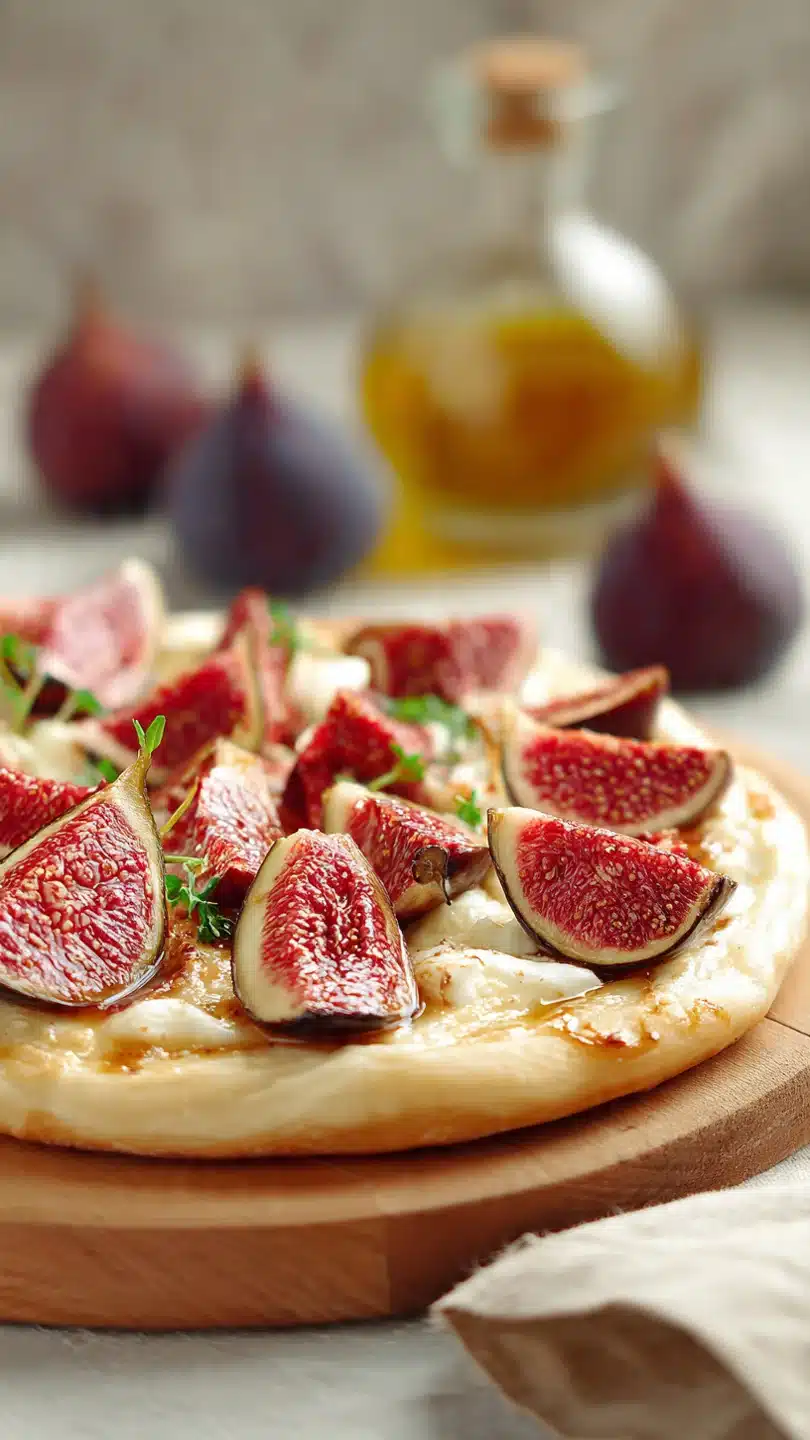
Gourmet Fig Pizza with Caramelized Onions and Prosciutto
Ingredients
Equipment
Method
- Preheat your oven to 475°F (245°C) with a pizza stone or inverted baking sheet inside. Let the dough rest at room temperature for 30 minutes. Meanwhile, heat 1 tbsp olive oil in a skillet over medium-low heat. Add the sliced onions and a pinch of salt. Cook, stirring occasionally, for 12-15 minutes until deeply golden and soft. Stir in 1 tsp balsamic vinegar and remove from heat.
- On a lightly floured surface, stretch or roll the dough into a 12-inch round or rustic oval. Don’t worry about perfect circles—rustic looks beautiful. Carefully transfer the shaped dough to a piece of parchment paper. This makes moving it to the hot stone much easier.
- Spread the caramelized onions evenly over the dough, leaving a 1/2-inch border. Scatter the crumbled goat cheese and quartered figs over the onions. Drizzle lightly with a bit more olive oil. Season with a crack of black pepper.
- Using a pizza peel or the back of a baking sheet, carefully slide the pizza (on the parchment) onto the preheated stone or baking sheet. Bake for 12-15 minutes, until the crust is puffed and golden brown, and the cheese is melty. The figs should look jammy.
- Remove the pizza from the oven and immediately top with torn prosciutto, fresh arugula, and thyme leaves. Finish with a final drizzle of good olive oil, a splash of balsamic vinegar, and a sprinkle of flaky sea salt. Let cool for 2-3 minutes before slicing and serving.


