
Pizza sauce homemade
There’s a quiet magic that happens when you swap a jar of store-bought pizza sauce for one you’ve made yourself. The difference isn’t subtle—it’s a vibrant, fresh, and deeply flavorful revelation that transforms your homemade pizza from good to great. As a chef who has made thousands of pizzas, I can tell you that the sauce is the soul of the pie.
It’s not just a tomato layer; it’s the foundation that carries the herbs, the garlic, and the essence of the toppings. This recipe is my go-to, a no-cook marvel that comes together with pantry staples in less time than it takes to preheat your oven. It’s bright, perfectly seasoned, and clings to your dough in the most delicious way.
Let’s make a sauce that will become your new secret weapon.
- 5-Minute Prep: This is a true no-cook sauce. Simply crush, mix, and let the flavors meld. It’s faster than running to the store.
- Superior Fresh Flavor: By skipping the long simmer, you preserve the bright, sweet-acid balance of the tomatoes. It tastes alive, not cooked down.
- Total Cost Control: A single can of tomatoes makes enough sauce for multiple pizzas at a fraction of the cost of premium jarred sauces.
- Complete Customization: You are the boss of the flavor. Want it garlicky? Add more. Prefer it spicy? Crank up the red pepper. This recipe is a perfect template.
- Clean Ingredients: You know exactly what’s in it—no added sugars, preservatives, or stabilizers, just real, simple food.
- Versatile Beyond Pizza: Trust me, you’ll find yourself using this as a bruschetta topping, a quick pasta sauce, or a dip for mozzarella sticks.
Ingredients You’ll Need
Let’s gather our ingredients—this is where the magic starts. You’ll be amazed at how these simple pantry staples come together to create something far greater than the sum of its parts. The quality of your tomatoes is the star here, so it’s worth seeking out a good can.
- Whole Peeled Tomatoes: A 28-ounce can is perfect. I highly recommend looking for San Marzano DOP tomatoes if you can. They are grown in volcanic soil near Naples, Italy, and are prized for their sweet flavor, low acidity, and fewer seeds. The difference is noticeable. If unavailable, any high-quality whole peeled tomato will work.
- Extra Virgin Olive Oil: This adds richness and carries the flavors of the garlic and herbs. Use the best you have for dressing salads; you’ll taste it in the final sauce.
- Garlic: Fresh is non-negotiable. Two cloves give a gentle background note. For a stronger punch, you can add a third. I like to grate it on a microplane for a fine, almost paste-like consistency that distributes evenly.
- Dried Oregano: The classic pizza herb. Dried oregano has a more concentrated flavor than fresh for this application. Rubbing it between your palms before adding helps release its essential oils.
- Fine Sea Salt: Crucial for balancing the acidity of the tomatoes and making all the other flavors pop.
- Freshly Ground Black Pepper: Adds a slight warmth and complexity.
- Red Pepper Flakes: Optional, but a pinch provides a gentle, building heat that I love.
- Fresh Basil: The finishing touch. Tearing the leaves, rather than cutting them, helps prevent bruising and releases their beautiful aroma.

Note: You’ll find the complete list of ingredients, along with their exact measurements, in the printable recipe card at the bottom of this post.
Kitchen Equipment Needed
You don’t need any special equipment for this recipe, which is part of its beauty. A large mixing bowl is your main vessel. A potato masher makes quick work of crushing the tomatoes, but believe me, using clean hands is incredibly effective and satisfying—you get perfect control over the chunkiness.
You’ll also need a small bowl for mixing the seasoned oil, measuring spoons, and a spoon or spatula for folding. If you prefer a completely smooth sauce, a food processor or blender can be used, but I adore the rustic texture of a hand-crushed sauce.
How to Make Homemade Pizza Sauce Recipe
Step 1: Prepare the Tomato Base
Start by opening your can of tomatoes. Pour the entire contents into a large bowl. Using your hands or a potato masher, crush the tomatoes thoroughly.
You’re aiming for a texture with varied sizes—some small pieces and some slightly larger chunks. This creates a wonderful body and mouthfeel in the finished sauce. Don’t drain all the liquid; it’s flavorful.
If you’re using a food processor for a smooth sauce, just pulse a few times until you reach the desired consistency. Tip from me: hand-crushing is therapeutic and gives you the best texture control.
Step 2: Create the Seasoned Oil
This is my professional trick for layering flavor without cooking. In your small bowl, combine the finely minced or grated garlic, dried oregano, salt, black pepper, and red pepper flakes. Now, pour the extra virgin olive oil over this mixture.
Stir it well. What you’re doing is creating an infused oil. The oil will gently mellow the raw garlic’s bite and “bloom” the dried oregano, waking up its dormant flavors.
This simple step elevates the entire sauce.
Step 3: Combine and Balance
Pour the fragrant, seasoned oil mixture over your crushed tomatoes. Add the torn fresh basil leaves. Now, gently fold everything together with a spatula.
You want to distribute the oil and herbs evenly without turning the tomatoes to mush. Take a moment to assess the consistency. If it seems too thick for spreading (like a paste), add a splash of the reserved tomato liquid from the can, one tablespoon at a time, until it’s spreadable but not watery.
Step 4: The Crucial Rest
Here is the step you cannot skip. Do not use the sauce immediately. Let it sit at room temperature for at least 15-20 minutes.
This resting period is non-negotiable in professional kitchens. It allows the salt to penetrate the tomatoes, the garlic to mellow further, and all the individual flavors to marry and become one cohesive, delicious sauce. This is when the magic truly happens.
Step 5: Taste, Adjust, and Serve
After the rest, give your sauce one final taste. This is your moment to be the chef. Does it need another pinch of salt?
A bit more black pepper? If the tomatoes taste a little sharp or acidic, a tiny pinch of sugar (about 1/8 teaspoon) can work wonders to round out the flavor. Your sauce is now ready to be generously spooned and spread over your pizza dough.
Step back and admire the vibrant red color and fresh aroma—you just made something truly special.
- Tomato Texture is Key: The ideal texture is rustic, not pureed. Over-processing can make the sauce watery and cause it to seep into the dough, making it soggy. Chunky bits caramelize beautifully in a hot oven.
- Salt Strategically: Salt doesn’t just add saltiness; it suppresses bitterness and enhances sweetness. Always salt to taste at the end of the resting period, as the tomatoes will absorb it.
- Garlic Management: If you’re sensitive to raw garlic, you can quickly sauté the minced garlic in the olive oil for 60 seconds until fragrant (but not brown), then let it cool before mixing. This takes the sharp edge off.
- Fresh vs. Dried Herbs: We use dried oregano here because its flavor stands up better in this no-cook application. Fresh basil is added at the end for its bright, aromatic quality. Never use dried basil—it tastes like hay.
- The Sugar Question: Only add a pinch of sugar if your tomatoes are noticeably acidic. High-quality San Marzano tomatoes often don’t need it. The goal is balance, not sweetness.
Recipe Variations
- Roasted Garlic Pizza Sauce: Replace raw garlic with 4-5 cloves of sweet, mellow roasted garlic. Mash them into a paste before adding to the oil.
- Spicy Arrabbiata-Style: Increase the red pepper flakes to 3/4 teaspoon and add a teaspoon of smoked paprika for a deep, fiery kick.
- Herb Garden Delight: Add 1 teaspoon of dried thyme and 1/2 teaspoon of dried marjoram to the oregano for a complex herbal profile.
- Sun-Dried Tomato Pesto Twist: Blend in 1/4 cup of oil-packed sun-dried tomatoes (drained) for an intensely rich, umami-packed sauce.
- Creamy Vodka-Inspired: For a decadent pink sauce, stir in 1/3 cup of heavy cream or full-fat coconut milk and a tablespoon of tomato paste after mixing.
- Green Pizza Sauce (Pesto Alternative): Replace the tomatoes with two cups of packed fresh basil and spinach. Use 1/2 cup of olive oil, pine nuts, and Parmesan cheese in a food processor.
What to Serve With This Sauce
Of course, this sauce is destined for homemade pizza. It’s perfect for a classic Margherita with fresh mozzarella and basil, a Pepperoni pie, or a loaded Vegetarian pizza. But its uses extend far beyond.
Spread it on flatbread for a quick snack, use it as a dipping sauce for homemade garlic knots or mozzarella sticks, or thin it out with a bit of pasta water for a stunningly quick spaghetti pomodoro. For a full Italian feast, serve pizzas alongside a crisp Caesar salad, roasted garlic broccoli, and a glass of Chianti or Sangiovese.
Storage & Make-Ahead Instructions
- Refrigeration: Transfer any unused sauce to an airtight container. It will keep well in the refrigerator for up to 5 days. The flavors will continue to develop and meld, often tasting even better on day two.
- Freezing: This sauce freezes exceptionally well. Portion it into freezer-safe bags or containers (1-cup portions are handy). It can be frozen for up to 3 months. Thaw overnight in the refrigerator before using.
- Make-Ahead Strategy: This sauce is an ideal make-ahead component. Prepare it up to 2 days in advance and store it covered in the fridge. Let it come to room temperature for about 30 minutes before using for easy spreading.
- Avoid Metal: For storage, use glass or plastic containers. Prolonged contact with reactive metals like aluminum can impart a metallic taste to the acidic tomatoes.
Frequently Asked Questions
Q: Can I use fresh tomatoes instead of canned?
A: You can, but it requires extra work. You’ll need to blanch, peel, seed, and crush about 2 pounds of ripe Roma tomatoes. Canned tomatoes are consistently ripe, peeled, and ready year-round, making them the more reliable and convenient choice for this recipe.
Q: Why no-cook? Won’t the garlic taste raw?
A: The no-cook method preserves the bright, fresh flavor of the tomatoes. The garlic mellows significantly during the resting period as it marinates in the oil and tomato acids. If you’re concerned, use the quick sauté tip mentioned above.
Q: My sauce is too watery. What did I do wrong?
A: You likely over-processed the tomatoes or didn’t drain enough of the canning liquid. Next time, drain the tomatoes more thoroughly, reserving the liquid to add back only if needed. For now, you can strain some liquid out or add a tablespoon of tomato paste to thicken it.
Q: Can I double or triple this recipe?
A: Absolutely! This recipe scales up perfectly for batch cooking. It’s a fantastic idea to make a large batch and freeze it in pizza-sized portions for future easy meals.
Q: How much sauce should I use per pizza?
A: For a standard 12-inch pizza, use about 1/2 to 3/4 cup of sauce. Spread it thinly, leaving a 1/2-inch border for the crust. Using too much sauce is a common mistake that leads to a soggy pizza center.
Q: Is this sauce suitable for canning?
A: No. This is a fresh, no-cook sauce with raw garlic and fresh basil. It has not been processed to be shelf-stable and must be refrigerated or frozen.
Q: Can I make this without a food processor or masher?
A: Yes! Simply pour the tomatoes into your bowl and use your (clean) hands to crush them. It’s effective, gives you perfect texture control, and is quite satisfying.
Final Thoughts
Mastering this simple homemade pizza sauce is a small kitchen victory that pays enormous dividends. It’s the kind of foundational recipe that builds confidence—proving that with a few quality ingredients and no special skills, you can create something profoundly better than anything you can buy. The vibrant color, the fresh aroma of basil and garlic, and the bright, balanced taste will make your kitchen smell like a pizzeria and your homemade pies taste like they came from one.
I encourage you to make this recipe your own. Adjust the garlic, play with the herbs, find your perfect level of spice. Then, share your creation.
Tag me on social media or leave a comment below—I love seeing your culinary wins. Once you try this sauce, I believe you’ll never look at a jar of store-bought the same way again. Happy cooking
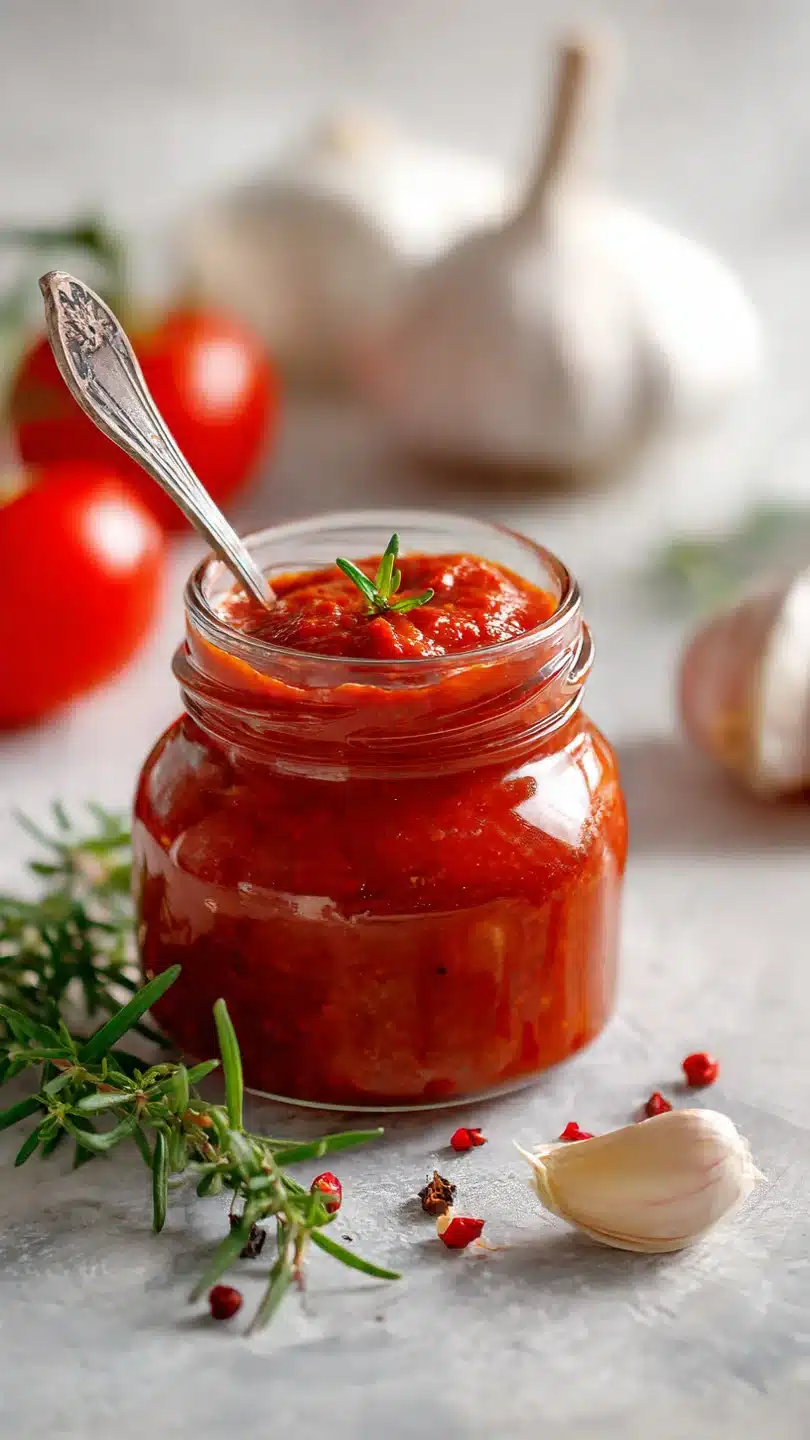
Classic Homemade Pizza Sauce
Ingredients
Equipment
Method
- Drain the canned tomatoes, reserving about 1/4 cup of the liquid. Place the tomatoes in a large bowl. Using clean hands or a potato masher, crush the tomatoes until you achieve a chunky, rustic texture. This gives the sauce body.
- In a small bowl, combine the minced garlic, dried oregano, salt, black pepper, and red pepper flakes (if using). Pour the extra virgin olive oil over the mixture and stir to create a seasoned oil. This step helps bloom the dried herbs and infuse the oil with garlic flavor.
- Pour the seasoned oil mixture over the crushed tomatoes. Add the torn fresh basil leaves. Gently fold everything together until well combined. If the sauce seems too thick, add a tablespoon or two of the reserved tomato liquid until it reaches your desired consistency.
- Taste the sauce! This is the most important step. Adjust the seasoning with more salt, pepper, or a pinch of sugar if the tomatoes are too acidic. Let the sauce sit at room temperature for at least 15-20 minutes before using to allow the flavors to meld.


