
Homemade pizza dough
- Easy to Make: With clear instructions and professional tips, even beginners can achieve great results.
- Customizable: Tailor the dough to your taste with different flours or added herbs.
- Restaurant Quality: Enjoy a chewy, flavorful crust that rivals your favorite pizzeria.
- Family-Friendly: A fun activity to do with kids, from kneading to topping.
- Versatile: Use for traditional pizzas, calzones, or even breadsticks.
- Dietary Adaptable: Easily modified for gluten-free or vegan diets.
Ingredients You’ll Need
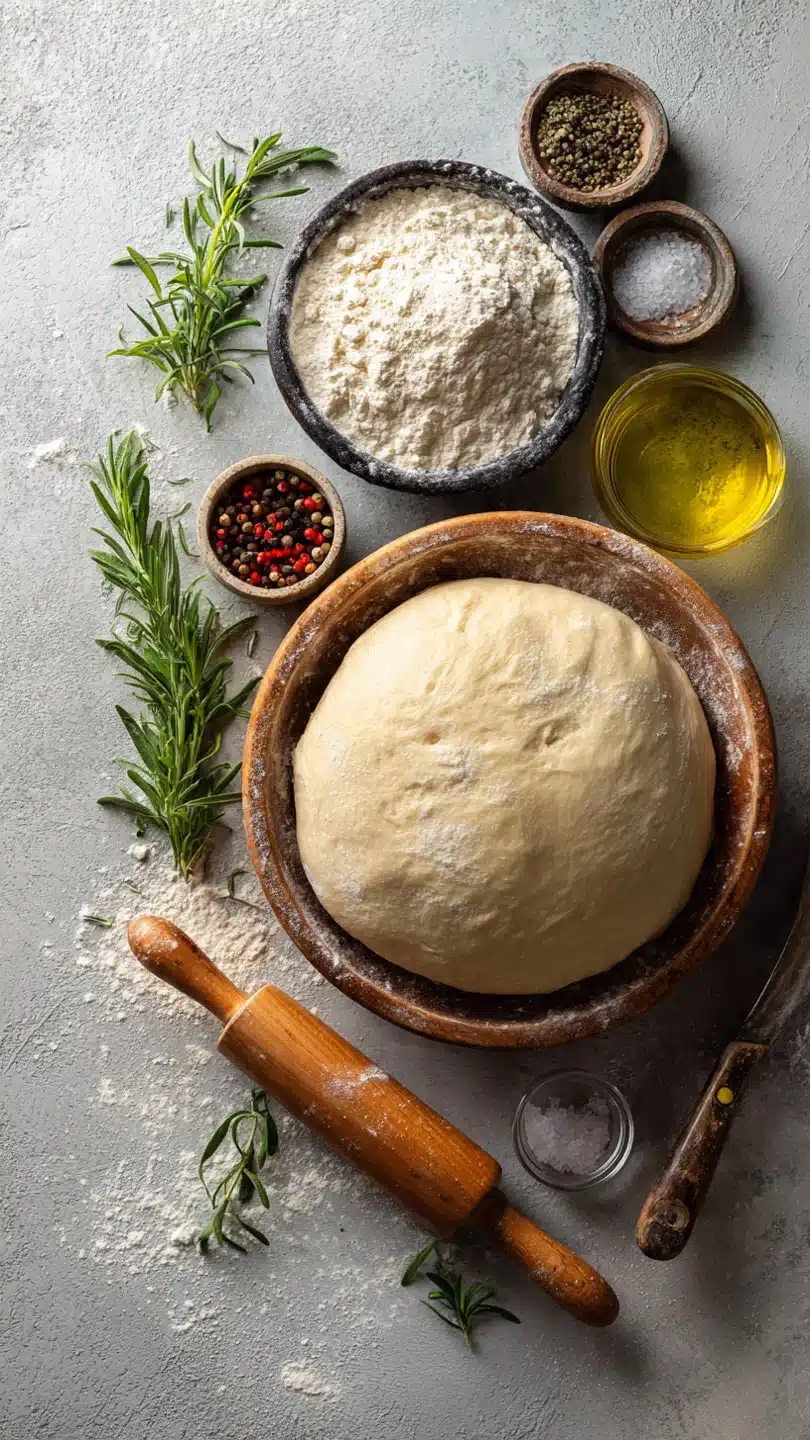
Let’s gather our ingredients—these simple pantry staples create magic together to form the perfect pizza dough base.
For the Dough:- All-purpose flour: The backbone of our dough, providing structure and chewiness.
- Sugar: A small amount to feed the yeast and promote fermentation.
- Salt: Enhances flavor and controls yeast activity.
- Active dry yeast: The leavening agent that makes the dough rise.
- Warm water: Activates the yeast; ensure it’s between 105°F and 115°F for best results.
- Olive oil: Adds flavor and tenderness to the dough.
When selecting your flour, look for high-quality all-purpose flour with a protein content of around 10-12% for the best results. If you’re looking for a whole grain option, you can substitute up to half of the all-purpose flour with whole wheat flour. For yeast, I recommend using a trusted brand like Red Star or Fleischmann’s.

Note: You’ll find the complete list of ingredients, along with their exact measurements, in the printable recipe card at the bottom of this post.
Kitchen Equipment Needed
To make this homemade pizza dough, you’ll need:
- Large mixing bowl
- Small bowl
- Wooden spoon
- Pizza peel or baking sheet
- Pizza stone (optional, but recommended for a crispier crust)
- Rolling pin
- Damp cloth for covering the dough during rising
How to Make Homemade Pizza Dough Recipe
Step 1: Activate the Yeast
In a small bowl, combine the warm water, sugar, and yeast. Let it sit for about 5-10 minutes until it becomes frothy. This step activates the yeast, ensuring your dough will rise properly.
Believe me, this is crucial for a light and airy crust.
Step 2: Mix the Dough
In a large mixing bowl, combine the flour and salt. Make a well in the center and pour in the yeast mixture and olive oil. Mix until a shaggy dough forms.
Tip from me: Use a wooden spoon to start, then switch to your hands for better control.
Step 3: Knead to Perfection
Turn the dough out onto a floured surface and knead for about 10 minutes until smooth and elastic. Trust me, the kneading process develops the gluten, which is key to a chewy crust. You’ll know it’s ready when the dough springs back when poked.
Step 4: Let it Rise
Place the dough in a greased bowl, cover with a damp cloth, and let it rise in a warm place for about 1 hour or until doubled in size. Now comes the fun part—watching your dough transform!
Step 5: Shape and Bake
After rising, punch down the dough to release the air. Divide it into 2-4 portions, depending on the size of pizza you want. Roll out each portion on a floured surface to your desired thickness.
Preheat your oven to 475°F (245°C). If using a pizza stone, place it in the oven to heat up. Transfer your rolled-out dough to a pizza peel or baking sheet, add your toppings, and bake for 12-15 minutes or until the crust is golden and the cheese is bubbly.
Step back and admire your homemade pizza masterpiece!
Pro tip: For a crispier crust, pre-bake the dough for 5 minutes before adding toppings. This helps set the crust and prevents it from becoming soggy. Temperature matters: Ensure your water is at the right temperature (110°F) to activate the yeast without killing it. Too hot or too cold, and your dough won’t rise properly. Kneading technique: Use the heel of your hand to push the dough away from you, then fold it back over itself. Rotate the dough a quarter turn and repeat. This helps develop the gluten evenly. Avoid overworking: After the first rise, handle the dough gently to avoid knocking out too much air, which can result in a dense crust. Visual cues: Your dough is ready to bake when it’s golden brown on the edges and the cheese is bubbling and slightly browned.Recipe Variations & Customizations
- Whole Wheat Dough: Substitute up to half of the all-purpose flour with whole wheat flour for a heartier, nuttier crust.
What to Serve With This Recipe
Homemade pizza dough pairs wonderfully with a variety of dishes and beverages. For a complete meal, consider serving your pizza with:
- A fresh green salad dressed with a tangy vinaigrette
- Garlic knots or breadsticks made from the same dough
- A glass of red wine or a crisp Italian beer
- For dessert, try a light gelato or a fruit-based sorbet
This recipe is perfect for casual dinners, movie nights, or even a pizza party with friends. Its versatility makes it suitable for any occasion.
Storage & Make-Ahead Instructions
- To store your homemade pizza dough, wrap it tightly in plastic wrap or place it in an airtight container. It can be refrigerated for up to 3 days or frozen for up to 3 months. When ready to use, let it come to room temperature before rolling out.
For make-ahead convenience, you can prepare the dough up to the rising stage, then refrigerate it overnight. The next day, let it come to room temperature, then proceed with shaping and baking.
To reheat leftover pizza, preheat your oven to 375°F (190°C) and bake the slices on a baking sheet for about 10 minutes or until heated through. This method helps maintain the crust’s crispness.
Nutritional Benefits
- Using whole grain flours in your pizza dough can increase your fiber intake, promoting digestive health. Olive oil, a key ingredient, provides healthy monounsaturated fats that are good for heart health. If you opt for a variety of vegetable toppings, you’ll also boost your intake of vitamins and minerals.
Frequently Asked Questions
Q: Can I make this dough ahead of time?
Yes, you can prepare the dough up to the rising stage and refrigerate it overnight. Let it come to room temperature before shaping and baking.
Q: Can I use instant yeast instead of active dry yeast?
Yes, you can use instant yeast. Simply mix it directly with the dry ingredients and skip the activation step with water and sugar.
Q: How can I tell if my dough is kneaded enough?
The dough should be smooth, elastic, and spring back when poked. It usually takes about 10 minutes of kneading to reach this point.
Q: Can I freeze the dough?
Absolutely! Wrap the dough tightly in plastic wrap and freeze for up to 3 months. Thaw in the refrigerator overnight before using.
Q: What if my dough doesn’t rise?
Check the expiration date of your yeast and ensure your water is at the right temperature. If the yeast doesn’t foam after 10 minutes, it may be inactive.
Q: Can I make this recipe gluten-free?
Yes, use a gluten-free flour blend and add xanthan gum to help with texture. The dough may be stickier, so use more flour for dusting.
Q: How do I achieve a crispier crust?
Pre-bake the dough for 5 minutes before adding toppings. Using a pizza stone also helps with even heat distribution and crispness.
Q: What are some common mistakes to avoid?
Avoid overworking the dough after the first rise, as this can lead to a tough crust. Also, don’t use water that’s too hot or too cold, as it can affect yeast activation.
Recipe Origin or History
Pizza dough has its roots in Italy, where it has been a staple for centuries. The classic Neapolitan pizza, with its thin, chewy crust, inspired this recipe. Over time, pizza has evolved and adapted to various cuisines and preferences worldwide, but the basic dough remains a beloved foundation.
Final Thoughts
Homemade pizza dough is a rewarding and delicious project that brings the joy of a pizzeria into your own kitchen. With this recipe, you’ll enjoy a chewy, flavorful crust that’s easy to customize and perfect for any occasion. Give it a try and let me know how it turns out!
Don’t forget to share your creations on social media and leave a rating below. Happy baking, and enjoy your homemade pizza masterpiece!
Homemade Pizza Dough
Ingredients
Equipment
Method
- In a small bowl, combine the warm water, sugar, and yeast. Let it sit for about 5-10 minutes until it becomes frothy. This step activates the yeast, ensuring your dough will rise properly.
- In a large mixing bowl, combine the flour and salt. Make a well in the center and pour in the yeast mixture and olive oil. Mix until a shaggy dough forms. Tip from me: Use a wooden spoon to start, then switch to your hands for better control.
- Turn the dough out onto a floured surface and knead for about 10 minutes until smooth and elastic. Trust me, the kneading process develops the gluten, which is key to a chewy crust.
- Place the dough in a greased bowl, cover with a damp cloth, and let it rise in a warm place for about 1 hour or until doubled in size. Now comes the fun part—watching your dough transform!
- After rising, punch down the dough to release the air. Divide it into 2-4 portions, depending on the size of pizza you want. Roll out each portion on a floured surface to your desired thickness.
- Preheat your oven to 475°F (245°C). If using a pizza stone, place it in the oven to heat up. Transfer your rolled-out dough to a pizza peel or baking sheet, add your toppings, and bake for 12-15 minutes or until the crust is golden and the cheese is bubbly. Step back and admire your homemade pizza masterpiece!


